
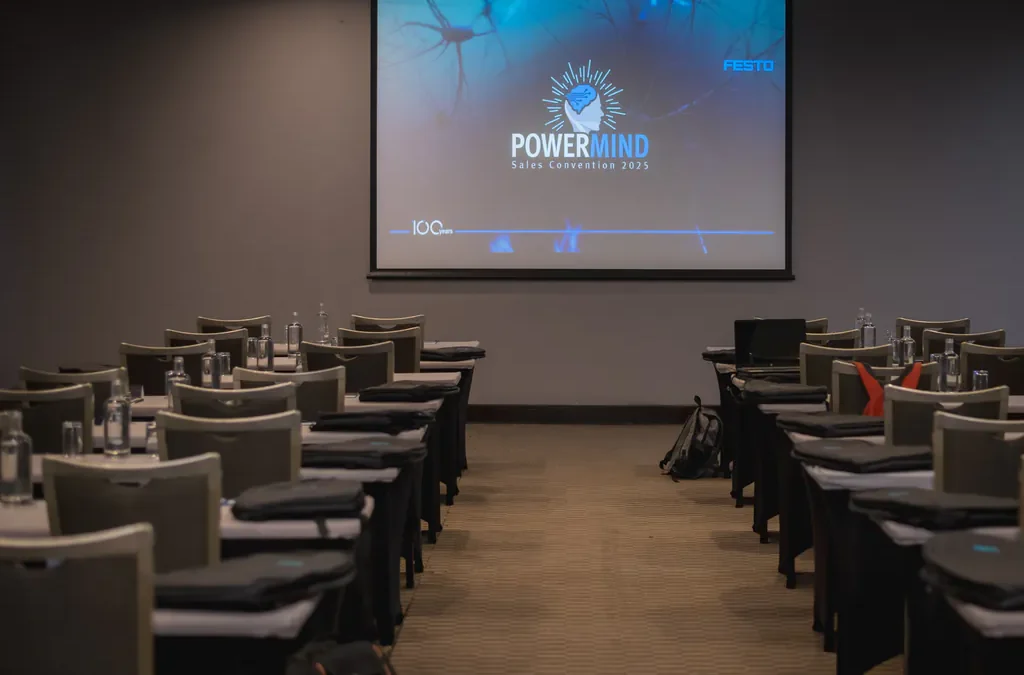
Hiring an event photographer in Santiago, Chile, is easier when the brief explains what your organization needs to communicate, rather than simply asking for event coverage. A conference organizer, an exhibiting company and an international agency may attend the same event while needing very different photographs.
Start with the schedule, the essential people and the publications you need to prepare. Then agree on coverage hours, access, delivery and the person authorized to make decisions on site. This guide explains the questions worth resolving before confirming a photographer for a corporate event in Santiago.
It is intended for marketing and communications teams, associations, institutions and agencies organizing a seminar, conference, convention or business gathering. The examples are planning scenarios, not fixed packages or promises of availability.
Explain whether you represent the organizer or a participant
An organizer may need a record of the overall conference: speakers, audience, branding, networking and key partners. An exhibitor may primarily need its stand, staff, visitors and one scheduled presentation. An agency may need coverage of a specific client without documenting the full event.
State that relationship in the first inquiry. It helps establish priorities and prevents a quotation for general coverage from being mistaken for a complete record of every participating organization.
If several departments will use the photographs, collect their requests before the brief is finalized. An internal report, a press announcement and a sponsor update can require different images. The photographer needs to know which requests are essential and which can be covered if the schedule allows.
What to include in your first inquiry
| Information | What to specify | Why it matters |
|---|---|---|
| Date and venue | Confirmed dates, venue name and address. | Availability, travel and access planning. |
| Schedule | Coverage start and finish for each day. | A clear scope rather than an open-ended booking. |
| Priorities | Speakers, ceremonies, sponsors and group photographs. | Attention to the moments your organization needs. |
| Rooms | Locations and overlapping activities. | A realistic route between sessions. |
| Delivery | Publication deadlines and required files. | Agreement on previews and final photographs. |
| Coordination | Booking contact, on-site lead and working language. | Clear instructions and decisions during the event. |
A preliminary schedule is useful even when some speakers are not yet confirmed. Identify the parts that may change and agree on when the final version will be shared. If the event spans multiple days, list each day separately.
Match coverage hours to the moments you cannot miss
The opening and closing times of the venue do not automatically define the photography booking. You may need images of the setup before delegates arrive, a team photograph after the formal program or networking that continues beyond the final presentation.
Mark these moments in the brief. For a two-day conference, check whether important people attend both days or only one. Reducing coverage on the second day may exclude a speaker, institution or closing ceremony that is essential to your communications.
Split coverage can be considered when priorities fall within clearly defined blocks. The quotation should explain how the blocks and intervals are treated. Do not assume that several separated periods have the same conditions as one continuous booking with an equal number of shooting hours.
Be specific about parallel sessions
VOGG plans event photography coverage with one photographer. If activities overlap, the brief needs an achievable route and an agreed order of priorities. One photographer cannot cover two unique moments happening simultaneously in different rooms.
Share a room plan and identify which speakers or activities are essential. Depending on the schedule, it may be possible to photograph part of several sessions. That approach still requires enough time for moving between rooms and complying with access restrictions.
If every session needs a complete record, describe that requirement before requesting a quotation. The scope must be evaluated rather than inferred from the number of delegates or the event’s overall duration.
Arrange access with the venue and the event organizer
Confirm who will provide the photographer’s accreditation and where the photographer should arrive. Some venues or institutional events have specific security procedures, restricted areas or rules about equipment and movement during presentations.
The booking contact should establish whether stage access, backstage access or entry to private sessions is authorized. If the photography supplier must complete forms or receive approval in advance, share those requirements early.
Production should also clarify permitted working positions and routes. The photographer’s movements need to fit the event operation and the accessibility arrangements made for participants. A venue plan is most useful when it shows the actual entrances and restrictions, not just the room names.
Agree on the working language and decision makers
International events often involve a remote booking team, a local production lead and several client representatives. Identify which person will give operational instructions and who can authorize a change to the booking.
State the working language and any communication requirements in the inquiry, and confirm them before booking. If a bilingual coordinator or another language support arrangement is required, discuss it explicitly rather than assuming it is part of the photography service.
For group photographs, someone from the organizing team should be responsible for gathering the participants. This is especially important when a senior guest has a limited time window or when several institutions need to appear together.
Ask for photographs that support your communications
A useful gallery usually needs more than repeated views of a stage. Depending on your brief, it may include the venue, speakers in action, audience reactions, interaction, branding and group photographs. The balance should reflect your intended publications.
For a press announcement, name the relevant spokesperson and the moment connected to the announcement. For a sponsor report, explain what needs to be documented. For internal communications, identify the teams and participants whose involvement matters.
You can review a published example in VOGG’s coverage of the Oxford Test of English event at the British Embassy in Santiago. It provides a reference for an institutional event gallery. Your own event should have a brief based on its specific program and communication goals.
Same-day photographs require advance planning
If your team needs photographs while the event is still taking place, request an early selection before confirming the booking. Explain what the first publication will say, which images it needs and when the files must be available.
Selection, editing and transfer take working time. A delivery window during the event needs to be compatible with the photography schedule and with the internet access available at the venue. A continuous editing service should not be assumed to be included in event coverage.
VOGG normally states a final event photography delivery time of up to four business days. An express selection must be arranged in advance, with the scope and timing confirmed in the quotation. For a multi-day event, confirm when the final delivery period begins.
Specify files, approvals and publication restrictions
Agree on file formats, intended channels and any additional versions required for publishing. If a global communications team needs particular crops or naming conventions, include them in the brief instead of adding them after delivery.
Identify the person who will receive and review the photographs. A delivery deadline does not include your organization’s internal approval time unless the workflow specifically provides for it.
Share restrictions involving private meetings, sensitive slides, participants who should not appear publicly or announcements under embargo. Your organization should validate names, titles and institutional information in the accompanying captions or copy.
The quotation should also describe the intended uses of the photographs and any conditions for sharing them with partners or other parties. Discuss portfolio use and confidentiality requirements before confirming the assignment.
Keep photography and video deliverables separate
If you need a highlight film, interviews or complete session recordings, list those as audiovisual deliverables. Photography coverage does not automatically include video production.
When simultaneous photography and video are required, VOGG quotes video separately and coordinates it with a dedicated videographer. The number of pieces, duration, sound, aspect ratios and delivery dates need their own scope.
This distinction also helps when you already have an international film crew or a local production company. A shared schedule can coordinate interviews, stage positions and access without assuming that both teams are responsible for the same outputs.
Check administrative requirements before confirming
International procurement can involve details that a local event lead cannot decide on site. Share the legal entity that will contract the service, the information required for supplier registration and the purchasing documents your organization needs.
Ask for written confirmation of the currency, taxes as applicable, payment method, payment timing and any booking or change conditions. Do not assume that a particular international payment method or procurement process is available without confirming it.
If the event needs a purchase order or prior vendor approval, allow enough time for that process. The photography scope and the administrative steps should both be clear before the event date.
Questions to resolve before you book
- Are the requested dates and exact coverage hours available?
- Which moments take priority if activities overlap?
- Who provides accreditation and access approval?
- Who can authorize schedule changes or extensions?
- What is included in the photographs and editing?
- Is an early selection needed, and has it been explicitly agreed?
- When will the final photographs be delivered?
- What publication uses and confidentiality conditions apply?
- Have the administrative and payment arrangements been confirmed?
Request an event photography quotation in Santiago
Explore VOGG’s corporate event photography in Santiago and review the event photography planning checklist when preparing your brief.
Send the event dates, venue, schedule, essential moments and delivery requirements. Include the booking entity, your on-site contact and the working language so the scope and coordination can be evaluated before confirmation.
Request a quotation for your event in Santiago

- Hiring an event photographer in Santiago, Chile: a practical booking guide - octubre 21, 2026
- Fotos de evento el mismo día: qué acordar antes de contratar - octubre 21, 2026
- Fotografía para un congreso de dos días: ¿cobertura completa o por bloques? - octubre 21, 2026